

Buying Coastal Property in Spain: What International Buyers Should Know
Spain’s coastline has long been one of the most attractive destinations for international property buyers. With its mild climate, diverse coastal landscapes, and strong infrastructure, coastal Spain offers a lifestyle that combines quality of life with long-term desirability.
For buyers considering property near the sea, the decision goes far beyond choosing a beautiful view. Coastal living is shaped by environmental factors, sea conditions, safety standards, and the way coastal areas are managed throughout the year. These elements influence not only daily enjoyment, but also how suitable a location is for long-term ownership.
One aspect that is often overlooked by buyers is Spain’s beach safety and quality flag system. While commonly associated with visitors, these flags also provide valuable insight into sea conditions, environmental standards, and local management — all of which are relevant when choosing where to buy coastal property in Spain.
This guide explains what international buyers should know before purchasing coastal property in Spain, with a clear focus on lifestyle suitability, environmental quality, and informed decision-making.
Why Coastal Property in Spain Continues to Attract International Buyers
Spain offers more than 8,000 kilometres of coastline, ranging from calm Mediterranean beaches to dramatic Atlantic shores. This diversity allows buyers to choose locations that match their personal preferences, whether they are looking for tranquillity, accessibility, or vibrant coastal communities.
International buyers are drawn to coastal Spain for several reasons:
- A stable and transparent property market
- Excellent international transport connections
- High-quality healthcare and infrastructure
- A climate suitable for year-round living
- Strong focus on coastal maintenance and public services
For many buyers, coastal property represents a long-term lifestyle choice rather than a short-term decision. Understanding how a coastal area functions beyond peak holiday season is essential for making a confident purchase.
Why Sea Conditions Matter When Buying Coastal Property in Spain
Sea conditions influence much more than swimming. They affect the character of a coastline, the usability of beaches, and the overall experience of living near the sea.
Buyers should consider:
- Wave patterns and currents
- Seasonal weather changes
- Wind exposure
- Beach maintenance and safety services
- Environmental protection and monitoring
Spain’s beach flag system offers a clear and standardized way to understand these factors, making it a useful reference point when evaluating coastal locations.
Coastal areas in Spain are subject to strict environmental and safety oversight, guided by Spain’s coastal management standards, which focus on sustainability, public safety, and long-term protection of the coastline.
Spain’s coastal management standards
Understanding Spain’s Beach Flag System from a Buyer’s Perspective
Spain uses a colour-coded flag system to communicate sea conditions and safety levels. While designed for public safety, these flags also reflect how coastal areas are managed and monitored — information that is relevant for buyers considering long-term coastal living.
Rather than viewing beach flags purely as visitor information, buyers can use them to better understand the coastal environment and daily realities of life by the sea.
Red Flag – Unsafe Sea Conditions
A red flag indicates dangerous sea conditions. Swimming and water activities are prohibited due to strong currents, high waves, or adverse weather conditions. In some cases, red flags may also be raised when no lifeguards are on duty.
What this means for buyers:
- Red flags may occur seasonally or during specific weather conditions
- Frequent red flags can indicate exposed coastlines or stronger currents
- These locations may suit some lifestyles better than others
- Families often prefer areas where red flags are less common
A red flag does not automatically reduce the value of an area, but it highlights the importance of understanding local sea behaviour before purchasing property.

Yellow Flag – Moderate Conditions, Increased Awareness
A yellow flag signals moderate sea conditions. Swimming is allowed, but caution is advised due to waves, currents, or changing conditions.
Buyer insight:
- Indicates a dynamic coastal environment
- Common in many well-managed coastal areas
- Reflects active monitoring and safety awareness
For many buyers, yellow-flag conditions are part of everyday coastal life and do not negatively affect long-term suitability.

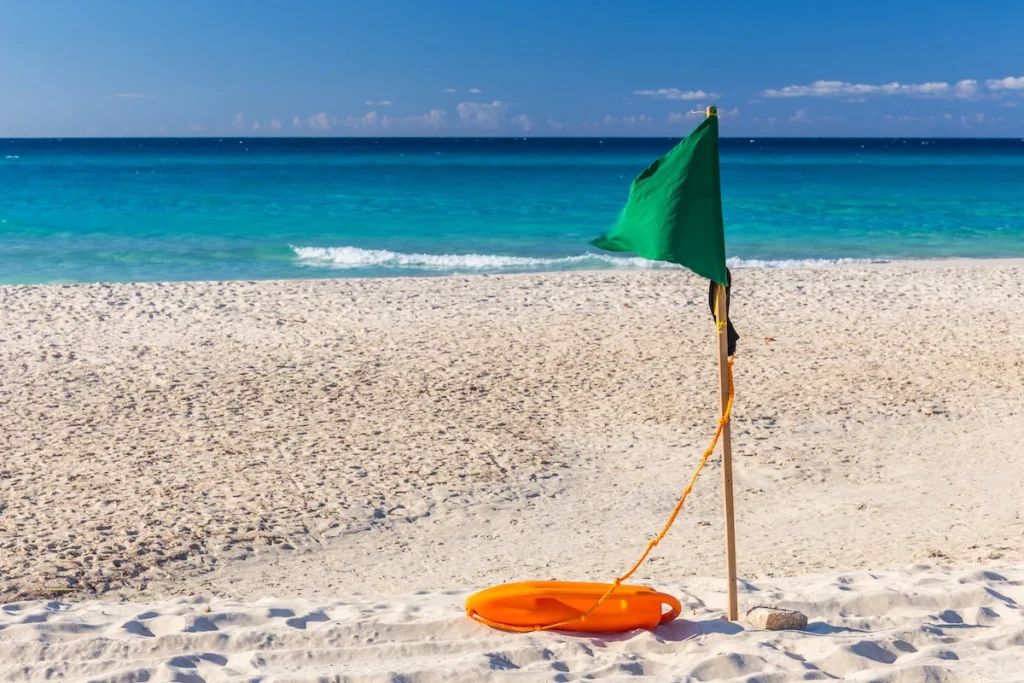
Green Flag – Calm and Safe Conditions
A green flag indicates calm sea conditions and safe swimming. These beaches are generally well suited for families and regular coastal use.
Why buyers value green-flag beaches:
- Suitable for frequent use and family activities
- Reflect stable sea conditions
- Often found near established residential areas
Green-flag beaches are typically associated with relaxed coastal living and year-round enjoyment.
Blue Flag – Environmental Quality and Coastal Standards
The blue flag is an international certification awarded to beaches and marinas that meet strict criteria for water quality, safety, environmental management, and public services.
For property buyers, blue-flag beaches often indicate:
- Well-maintained public spaces
- Strong municipal management
- High environmental standards
- Long-term desirability of the surrounding area
While blue-flag status should not be the sole factor in a buying decision, it is a positive indicator of coastal quality and infrastructure.

Purple Flag or Jellyfish Warning – Marine Life Awareness
A purple flag, or a red flag with a jellyfish symbol, warns of potentially harmful marine life. These warnings are typically seasonal and temporary.
Buyer considerations:
- Usually limited to warmer months
- Managed through monitoring and public information
- Rarely affects long-term suitability of an area
For most buyers, this is a minor and manageable aspect of coastal living.

Choosing the Right Coastal Area in Spain
Spain’s coastline offers a wide range of environments, and not all coastal areas provide the same living experience. Buyers should look beyond appearance and consider:
- Seasonal changes in activity levels
- Accessibility to services throughout the year
- Local infrastructure and planning
- Environmental protection policies
A location that functions well year-round is often better suited for long-term ownership.
Coastal Living: Daily Life and Long-Term Suitability
When buying coastal property in Spain, it is important to consider how the property will be used:
- Occasional stays
- Extended periods throughout the year
- Permanent living
Each scenario places different demands on location, services, and environment. Understanding coastal conditions helps buyers align their choice with their lifestyle plans.
What International Buyers Often Overlook
Many buyers focus on views and proximity to the sea, but overlook practical aspects such as:
- Wind exposure and salt air maintenance
- Noise levels during peak seasons
- Accessibility during different times of the year
- Long-term coastal development plans
These elements play a significant role in day-to-day comfort and long-term satisfaction.
Buying Coastal Property in Spain with Clarity and Confidence
Buying property in Spain is an important decision, particularly for international buyers navigating an unfamiliar market. Coastal purchases add additional considerations related to environment, lifestyle, and long-term suitability.
At Akunas, we believe that informed decisions start with taking the time to understand your personal situation, expectations, and long-term plans. Rather than focusing on transactions, our approach is centred on clarity, structure, and calm guidance.
By understanding both the property and its surroundings — including practical aspects of coastal living — buyers can move forward with confidence, knowing their decisions are well considered and aligned with their goals.
Guided Step by Step, with Calm, Care and Confidence
Buying a home abroad takes trust. Akunas acts as an independent buyer’s representative, guiding you objectively through the purchasing process while keeping your interests at the centre of every decision.
We take the time to listen carefully to your wishes and expectations. Based on this, we follow a clear and structured approach, ensuring you always know where you stand, what comes next, and what to expect.
Our guidance goes beyond the property itself. We focus equally on the surroundings, atmosphere, and overall quality of life — elements that are essential when buying coastal property in Spain. Throughout the process, we work alongside a trusted network of experienced legal, fiscal, and technical professionals to ensure transparency and reassurance at every stage.
Frequently Asked Questions
Is coastal property in Spain suitable for long-term living?
Yes. Many coastal areas in Spain are well equipped for year-round living, especially locations with established communities, healthcare, and services that function beyond the holiday season.
What should international buyers consider before buying coastal property in Spain?
Buyers should consider sea conditions, seasonal changes, infrastructure, accessibility, environmental standards, and how the area functions throughout the year, not only during peak tourist months.
Do sea conditions affect daily coastal living in Spain?
Yes. Sea conditions influence beach usability, safety, comfort, and the overall coastal atmosphere. Understanding local conditions helps buyers choose locations that match their lifestyle expectations.
Are Blue Flag beaches important when choosing where to buy?
Blue Flag beaches indicate high standards for water quality, safety, and environmental management. While not decisive on their own, they are a positive signal of well-managed coastal areas.
Is coastal property in Spain a good long-term choice?
For many buyers, coastal property in Spain offers strong long-term lifestyle value when located in areas with good infrastructure, environmental care, and year-round services.
Are there differences between coastal regions in Spain?
Yes. Spain’s coastline is diverse, and conditions vary significantly by region. Climate, sea behaviour, infrastructure, and community life differ, making careful location selection essential.
Is it safe for foreigners to buy coastal property in Spain?
Yes. Spain has a clear legal framework for international buyers. Working with independent professionals helps ensure clarity, transparency, and confidence throughout the process.
How does Akunas support buyers during the process?
Akunas acts as an independent buyer’s representative, guiding clients step by step with objective advice, clear communication, and a structured approach focused on their interests and long-term goals.
Conclusion: Making an Informed Coastal Property Decision
Buying coastal property in Spain is about more than location or views. It is about understanding how a coastal environment supports daily life, long-term comfort, and personal expectations.
By taking sea conditions, environmental standards, and coastal management into account, buyers gain a clearer picture of what living by the sea truly involves. Combined with calm, structured guidance, this knowledge allows buyers to make confident, well-informed decisions that stand the test of time.
Coastal living isn’t just a dream—it’s a lifestyle. Let us help you find your place in the sun along Spain’s most desirable shores.